ambergris – whale vomit as perfume
A scent of the sperm whale
Written by GlenN Lauritz Andersson & Denis Vasilije, fragrance experts
Ambergris – also known as whale secretion – is an expensive, sensual and warm ingredient found in many richer and darker perfumes. But what exactly is ambergris? How does ambergris smell, where does it come from, and why is it so valuable? At Gents, we take a closer look at what makes this much-discussed by-product of the sperm whale so special and desirable in perfumery.
Summary
-
Ambergris is a rare, warm and sensual perfume ingredient formed as a waxy secretion in the digestive system of the sperm whale, becoming usable as a fragrance material only after long maturation.
-
Ambergris should not be confused with amber, which is fossilised tree resin – in perfumery, ambergris refers exclusively to this marine-derived material with its soft, animalic and slightly saline scent profile.
-
Due to its extreme rarity and lengthy ageing process, natural ambergris is one of the most exclusive raw materials in perfumery, which has led to the widespread use of synthetic alternatives.
what is ambergris?
Ambergris is a wax-like substance secreted from the intestines of the sperm whale as a protective response when digesting squid, whose sharp beaks could otherwise cause significant irritation and damage to the digestive system. Excess material is expelled by the whale as so-called “whale vomit” in the form of soft, foul-smelling lumps, which eventually wash ashore and are collected.
In perfumery, the term refers specifically to ambergris, sometimes called grey ambergris, and should not be confused with amber, which is derived from fossilised tree resin. The colour of ambergris is crucial: when fresh, it is dark, almost black, soft in texture and completely unusable due to its intense and unpleasant odour, often described as sharp, faecal and reminiscent of fish oil. It takes approximately 20 to 40 years for ambergris to mature under the right conditions, during which it becomes light grey and ash-like, reaching a quality suitable for use in perfumery.
the historical use of ambergris
Ambergris has been documented since ancient times; as early as Babylon, this secretion from the sperm whale was known and believed by the Persians to possess medicinal properties. Within certain branches of Islam, the ingredient held a mythical and sacred status. For a long time, its origin remained unclear, until Marco Polo was among the first to suggest that it was expelled whale matter. In the 11th century, ambergris was introduced to Europe, where it became popular primarily as an aphrodisiac. During the Black Death in the 14th century, it was considered particularly effective against infection. Ointments made from ambergris were also prescribed as remedies for gout, paralysis and epilepsy. Today, ambergris is mainly used in Asia, where it remains valued as a fragrance material, medicine and spice. Speaking of aphrodisiacs – did you know that Casanova is said to have flavoured his chocolate with ambergris before his romantic conquests?
ambergris – scent, character and production
So what does ambergris smell like? Much depends on how it is processed and what it is blended with. Like oud from agarwood, ambergris has many facets, but certain characteristics stand out. Once matured, it is often recognised by its velvety, sensual scent of musk, soap and tobacco, combined with marine, oceanic nuances. Many people associate it with the scent of sun-warmed skin after a long day at the beach. A subtle vanilla-like sweetness can often be detected, along with animalic notes, although ambergris is considered the least animalic of this category. Compared to civet, oud and castoreum, it is less aggressive and “dirty” in character – provided we are referring to ambergris in its diluted form.
Unlike many fragrance materials, ambergris cannot be distilled into an essential oil. Instead, an essence known as ambergris tincture is produced through alcohol extraction. Ambergris is often blended with other animalic substances to enhance complexity. One particularly costly method involves crumbling ambergris, musk and civet, mixing them with warm 95% alcohol and storing the mixture in warm horse manure for at least twenty days. A less elaborate process uses crushed ambergris, distilled water, alcohol and milk sugar, though recipes vary depending on the desired character.
how much is whale vomit worth?
The sperm whale is currently classified as vulnerable due to historical hunting for other purposes, such as its valuable blubber. That fresh ambergris was unusable is hardly surprising, unless one was willing to store it for several decades. The reduced whale population has also made matured ambergris that has aged in the ocean extremely rare – and therefore extraordinarily valuable. Prices for ambergris are astronomical, reflected not only in counterfeits but also in dramatic auction results. A 1.1-kilogram lump found in Wales was sold at auction in 2015 for £11,000, while pieces weighing over 500 kilograms can fetch millions.
Can ambergris be found in Sweden? Unlikely. While sperm whales can appear in almost any ocean, including the Arctic Ocean, finds are far more common in warmer regions such as the Mediterranean and along the Caribbean islands. There are certainly easier ways to make money, especially since it is far more economically viable to use synthetic alternatives than genuine ambergris in modern perfumery.
synthetic ambergris and substitutes
Given such a rare and valuable ingredient, it was almost inevitable that experiments with substitutes for ambergris began in the 1950s. As a result, most commercial perfumes that list ambergris as a note, often in the base, do not contain genuine ambergris – which would be reflected in the price – but rather substitutes or synthetic versions. The goal is to create an olfactory profile that pays tribute to ambergris, often with surprisingly complex and convincing results, produced within hours instead of decades.
A common substitute is labdanum absolute, whose resin contains ambrein, the same aroma compound found in ambergris. Another substitute is the essential oil of clary sage, which recalls both ambergris and musk and is often blended with benzoin, a resin from the styrax tree that lends a warm, smoky, vanilla-like character.
The most widely used alternative today, not least because of its low cost, is the synthetic ambergris molecule ambroxan, which captures the accords of sun-warmed skin and subtle sweetness associated with genuine ambergris. It is sometimes combined with other substitutes as well.
perfumes featuring ambergris
Among the few perfumes believed to contain real ambergris is the classic Chanel No. 5, although it is uncertain whether this is still the case today, along with certain fragrances from Gucci and Givenchy. These are exceptions, however. So which perfumes contain ambergris-inspired accords?
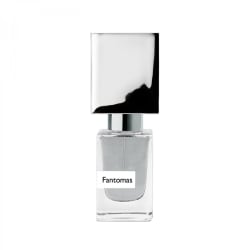
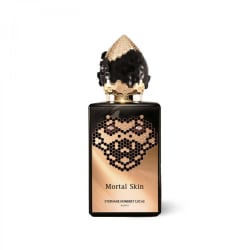
A favourite for many is Acqua di Parma’s Ambra, a dark and deep fragrance launched as a tribute to ambergris, with a result reminiscent of leather with a raw, almost animalic character, yet refined and elegant. The balsamic Mortal Skin by Stéphane Humbert Lucas, evoking skin, latex and sacred incense, places ambergris at its core, combined with labdanum and musk. In Roja’s exclusive Great Britain, where hay and animalic stable notes meet soap and elegant violet, ambergris and labdanum form key cornerstones. Ambroxan appears in Venti4 Profumo’s Venti4 Verde, which also conveys ambergris’ salty marine facets, as well as in Molton Brown’s Neon Amber, which contains both ambroxan and labdanum in the base. Clear traces of ambergris, benzoin and ambroxan DNA can also be found in many creations by Alessandro Gualtieri for Nasomatto and Orto Parisi, even though he famously refuses to disclose the exact notes and ingredients.
Ambergris is complex and fascinating, capable of opening up an entirely new olfactory world. Not bad for something that began as whale vomit, is it?