
Vintage Classics
Written by Glenn Lauritz Andersson & Denis Vasilije, fragrance experts
Trend-spotting in the world of fragrance differs significantly from following the cycles that emerge, disappear and return in hair and facial hair trends. The development of perfume more closely resembles the fashion world, combining cyclical trends with gradual progress shaped by society and technological innovation.
Summary
-
The history of perfume has evolved over centuries, from natural florals in the 18th century to the classic fragrance categories Floral, Citrus Cologne and Fougère used today.
-
During the 20th century, men’s fragrances became a distinct category with iconic launches such as Caron Pour Un Homme and Old Spice, expanding the male fragrance market.
-
Over the decades, classic scents from major fashion and perfume houses have continued shaping perfumery – from aromatic fougères to marine and gender-neutral trends still evolving today.
Until the 18th century, virtually all perfumes were Floral, meaning based on natural flower essences extracted into oils. By the early 20th century, perfumery had instead developed into the three categories we still use today: Floral, Citrus Cologne and Fougère.
The Industrial Revolution enabled the creation of artificial scent molecules as well as improved extraction of natural materials. Fougère, the third fragrance family, emerged in this way with Fougère Royale in 1882, composed of lavender, oakmoss and the synthetically isolated molecule coumarin. Beyond introducing new scent profiles, perfumes became cheaper to produce and purchase. Perhaps even more importantly, they became easier to standardise and transport, ultimately transforming perfumery into a true industry.

1920s & 30s
The post-World War I era was still dominated by continental colognes and English lavender scents. A famous example is the unusually light and fresh Acqua di Parma Colonia, launched in 1916 and originally intended to be worn on a handkerchief in the breast pocket.
The 1920s also saw the launch of a fragrance that would change perfumery dramatically. At the time, nearly all perfumes were unisex. While some were composed for specific individuals — such as when Creed created a rose fragrance for Queen Victoria in 1845 — most perfumes were worn by both sexes. Then something shifted:
It was what I was waiting for –
a perfume like nothing else.
A woman’s perfume,
with the scent of a woman."
— Coco Chanel on Chanel N° 5.
It would take more than a decade before a true male counterpart appeared. In 1934, Caron launched “Pour Un Homme,” featuring vanilla and lavender over amber and cedarwood. While men’s aftershaves had existed earlier, such as Proraso, this was the first product for men focused primarily on fragrance rather than medicinal qualities. The scent became a massive success and, like Chanel N° 5, created an entirely new market.
In 1938, Shulton introduced a men’s version of Old Spice, and over 80 years later it remains one of the world’s best-selling men’s fragrances.

1940s & 50s
After World War II, the market for men’s fragrances continued growing. Improved hygiene standards led many brands that had focused solely on aftershave to realise their medicinal emphasis was outdated.
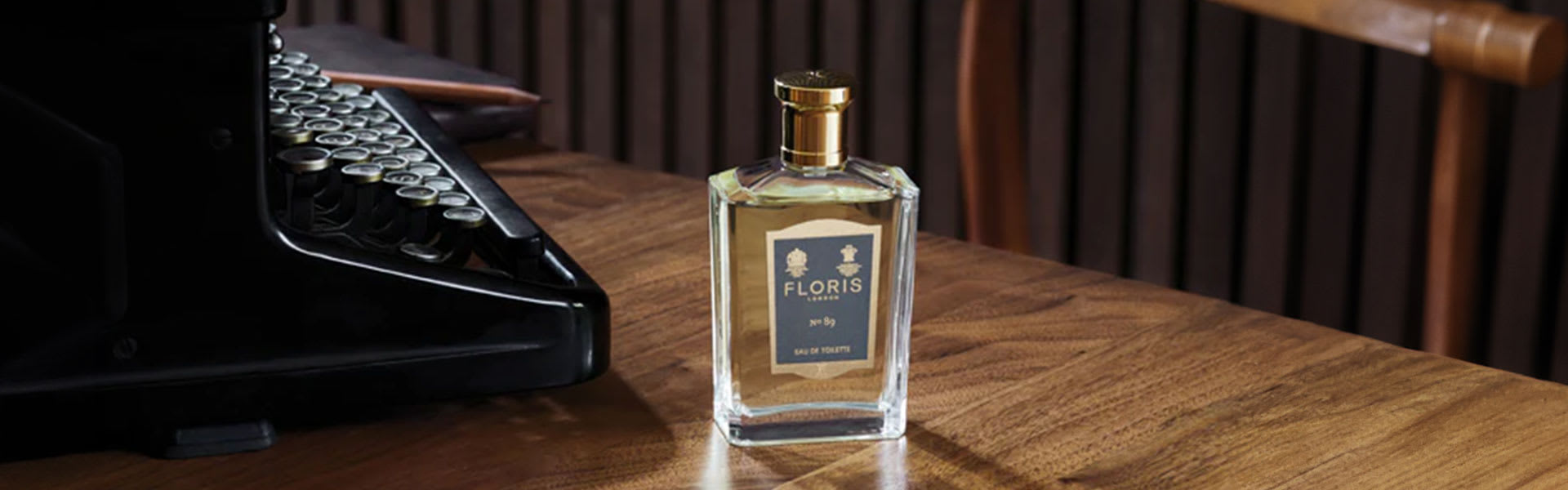
Highlights include Floris No. 89 (1951), a Woody Aromatic famously worn by James Bond in Ian Fleming’s novels, and Pino Silvestre (1955), a fougère still admired for its refreshing clarity. In 1955, Chanel finally released Pour Monsieur — the masculine counterpart to its iconic No. 5.
Another classic is Tabac Original (1959), symbolising old-school gentlemanly masculinity. Guerlain’s Vetiver (1958) was praised for its masculine bouquet of citrus layered over vetiver, moss and tobacco.


1960s & 70s
The 1960s introduced numerous exciting launches. Fabergé’s iconic Brut Pour Homme (1964) helped bring men’s fragrance to the mainstream. Dior’s Eau Sauvage (1966) followed, and Estée Lauder launched Aramis in 1964. The 1970s marked the rise of designer fragrances for men. Men’s scents — now often called colognes — became an established concept. New synthetic materials nearly exploded the market, especially aromatic fougères with spicy nuances. Designers such as Paco Rabanne and Gucci followed Chanel and Dior into men’s perfumery.
1980s & 90s
The 1980s saw an influx of designer brands entering the fragrance market. Calvin Klein launched “Calvin,” Armani introduced “Pour Homme,” and Hugo Boss released “Number One.” Creed’s 1985 classic Green Irish Tweed became a celebrity favourite. In 1988, Davidoff Cool Water introduced the first truly marine fragrance, replacing dominant citrus notes with pine, mint and salty sea air.
“Cool Water revolutionised masculine perfumery.”
— Roja Dove
The 1990s saw fresh interpretations dominate. Kenzo Pour Homme (1991) brought spicy marine notes, while Jean-Paul Gaultier’s Le Male (1996) combined oriental warmth with mint freshness. The decade concluded with Chanel’s Allure Homme (1999), echoing the complexity of No. 5 where individual notes blend seamlessly.
2000s & 10s
While established houses strengthened their positions, challengers emerged. Hermès shook the market with Terre d’Hermès (2006), Paco Rabanne released 1 Million (2008), and Creed modernised its image with Aventus (2010). Fragrance became integral to modern life. The idea that men’s fragrances must be oriental or fougère faded, as did the century-old notion that men’s and women’s scents must differ.
Genderless fragrance became the new norm. With advancing technology enabling new natural extractions and personalised scents, the future of fragrance promises to be exceptionally exciting.
